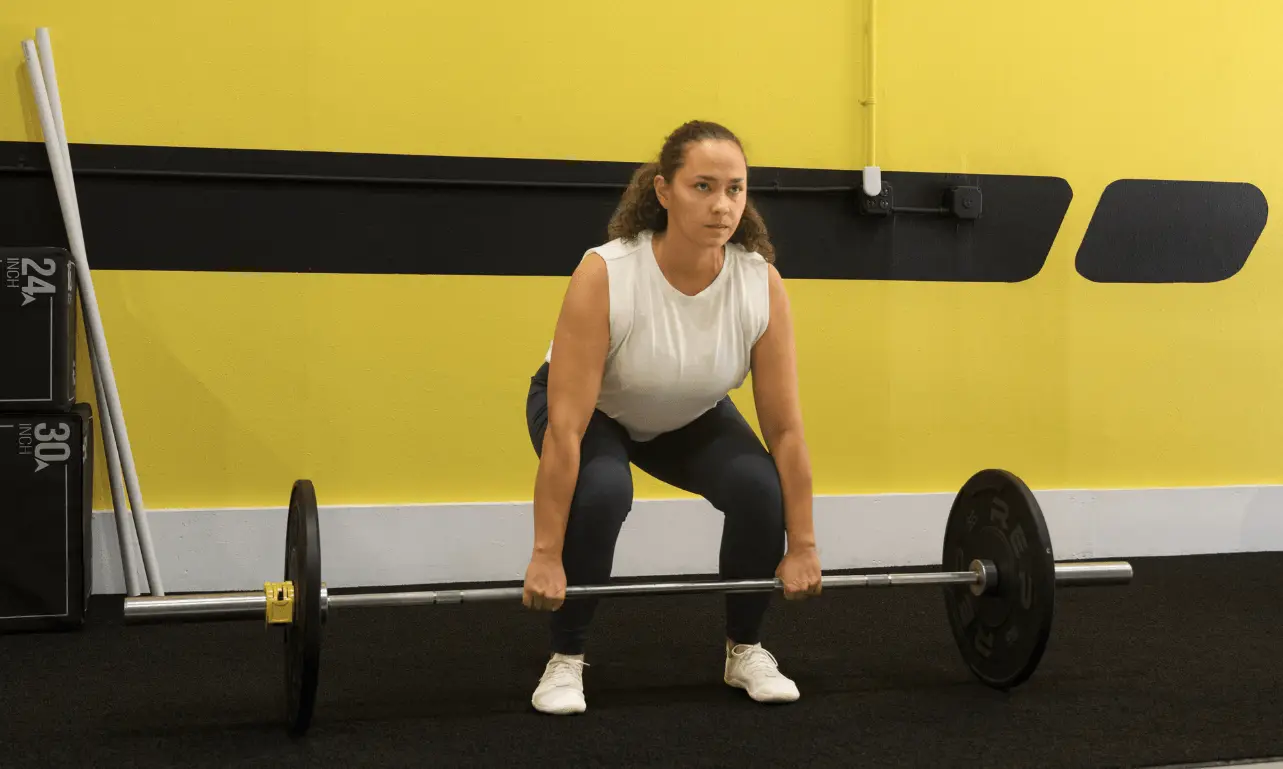
I’ve watched enough people work through a “functional” circuit to know the term stopped meaning much a long time ago. Kettlebell swings, sandbag carries, a few minutes on an unstable surface, maybe a battle rope finisher. It looks athletic. It looks like it should transfer to real life. And then you watch that same person try to get into a deep hip hinge without their lower back rounding, or ask them to rotate through their thoracic spine and their whole ribcage locks up and moves as one block, and the gap between what the workout looked like and what the body can actually do becomes obvious.
That gap is the whole problem with how functional training got defined.
What functional training was supposed to mean
The original idea wasn’t bad. Traditional strength training, in its purest form, isolates. Bench press for the chest, curls for the biceps, leg extensions for the quads. Useful for building specific muscle, not particularly useful for teaching the body to coordinate as a system. Functional training showed up as a correction to that. Train movements, not muscles. Squat, hinge, push, pull, carry. Multi-joint, multi-muscle, closer to how the body actually operates outside a machine that isolates a single joint and bolts it into a fixed path.
That correction had real value, and it’s worth saying plainly. Someone doing goblet squats and farmer carries is training more usefully than someone doing leg extensions and cable flies for an hour. Compound movement asks the body to coordinate, stabilize, and produce force across multiple joints at once, which is a closer approximation of almost anything you’ll actually do outside a gym. Nobody picks a suitcase up off the ground with one muscle group. The instinct behind functional training wasn’t wrong.
Where the modern version breaks down
Somewhere along the way, the correction turned into a costume. If the exercise looked unstable, involved uneven loading, or resembled a task you might do outside a gym, it got the functional label. Nobody checked if the person doing it had the joint capacity to perform it well in the first place. A sandbag carry with a rounded spine and a locked ribcage isn’t functional. It’s just loaded compensation with better branding.
This is where I’ll push back on my own industry a little. A lot of functional training programming assumes that if you give someone a compound movement, their body will organize itself correctly around it. Sometimes that’s true. Often it isn’t, and the body just finds the path of least resistance instead, usually by borrowing range from a joint that has it to cover for one that doesn’t. Someone with a stiff thoracic spine will rotate through their lumbar spine instead, because the lumbar spine has range to give even though it isn’t built to give much of it. Someone with limited ankle dorsiflexion will collapse their arch and cave their knee inward during a lunge, because the ankle can’t get there any other way. The exercise still gets performed. It gets performed by whichever joint offered the least resistance, not necessarily the joint that was supposed to be doing the work.
That’s the piece that’s missing from most functional training conversations. The movement pattern is downstream of joint capacity, not a substitute for it.
Function is a property of the joint, not the exercise
Here’s the part most functional training programming skips entirely. Before you ask if someone can carry, throw, or crawl, you have to know if their joints can access the range that task requires, and if they can control that range under tension. Movement patterns don’t create capacity. They express whatever capacity is already there, good or bad.
This is the piece we build everything around at Motive, and it comes directly from Functional Range Conditioning. FRC treats the nervous system as the gatekeeper of movement. Your brain will only let you actively access a range it trusts you to control, and it starts braking well short of where tissue is actually at risk. That’s why someone can have decent passive range, a coach can pull their hip into a deeper position by hand, and the moment that same person tries to produce that range on their own, it’s nowhere to be found. The tissue was never the limiting factor. The nervous system’s trust in that position was.
That distinction changes what “functional” should mean in practice. The exercise itself doesn’t decide that. What decides it is if the training actually closes the gap between the range someone has and the range they can use.
What this looks like joint by joint
A hip that can’t reach full flexion under control will show up in a squat as a tucked pelvis and a rounded lower back near the bottom, because the spine is being asked to keep contributing range the hip stopped offering. A thoracic spine that can’t rotate will show up in almost anything overhead, a press, a throw, a swing, as compensatory extension through the lumbar spine, because the ribcage refuses to move independently from the pelvis. A shoulder with limited external rotation will show up as an elevated, shrugged position the moment the arm goes overhead, because the joint is substituting scapular movement for range it doesn’t have at the glenohumeral joint itself.
None of these are training problems you fix by adding more functional exercises. They’re capacity problems, and capacity problems get fixed by training the specific joint that’s missing range and control, not by loading a pattern and hoping the joint catches up on its own. It rarely does. More often, the compensation just gets stronger and harder to unwind, because you’ve now reinforced it under load.
Two systems, not one style of workout
We build joint capacity through two systems that solve different pieces of the same problem, and neither one looks much like a typical functional training class.
FRC handles ownership of range. Controlled Articular Rotations take a joint through the largest circle it can produce under full muscular control, which is both training and an honest daily read on where that joint actually stands. A CAR isn’t a warm-up circle. Momentum does most of the work in a warm-up circle. In a CAR, muscular tension drives every degree of the arc, which is a completely different neurological demand. From there, PAILs and RAILs build strength at the end ranges most programs never touch, the exact positions that get skipped over because they’re uncomfortable and don’t show up in a typical warm-up. That’s deliberate. Building isometric strength at the outer edge of a joint’s range is what teaches the nervous system that position is safe to load, which is the only thing that actually moves the brake point.
WeckMethod and coiling core training handle something FRC doesn’t directly address, which is rotation and force transfer through the trunk. Most functional training programming still treats the core as something to brace and stabilize, full stop. That’s not wrong for certain tasks, powerlifting being the clearest example, where a rigid trunk under a bar is exactly what you want. It’s incomplete for almost everything else. Sprinting, throwing, striking, even the ordinary mechanics of walking, all rely on the spine rotating and coiling to transfer force between the upper and lower body. One side of the trunk compresses while the other lengthens, and that spiral is what lets force move efficiently from the ground, through the hips, through the trunk, and out through the arm or leg doing the work. A program that only trains anti-rotation is training half the system and calling it complete.
Neither of these replaces conventional strength work. Squats, presses, carries, all of it still has a place, and a large one. But loading a pattern before the joints underneath it can support that pattern just teaches the body a more expensive way to compensate. Strength built on top of a compensation doesn’t disappear when the compensation eventually catches up with someone. It just makes the compensation heavier.
Why this has to start with an assessment
Guessing which joints are limiting someone is a waste of both of our time, and it’s the part a lot of functional training gets backwards. The usual approach starts with the exercise: pick a compound movement, watch how it looks, and try to clean up whatever breaks down. That works eventually, but it’s slow, and it’s reactive. You’re diagnosing the joint by watching it fail under load, which means the person has already spent months reinforcing whatever compensation got them through the movement in the first place.
A Functional Range Assessment flips that order. We measure what each joint can do actively, joint by joint, before any of that gets buried inside a compound movement. That tells us exactly where the gap between passive and active range sits, which means programming starts from real information instead of a best guess based on how someone happened to move in their first session.
What this actually looks like in the gym
In practice, this means the order of operations matters more than the exercise selection. We’re not avoiding kettlebells or carries. We’re making sure the hips, shoulders, and spine involved in those movements can actually get into the positions those movements demand, and can produce force once they’re there.
A session built this way usually starts with CARs and targeted end-range work for whatever the assessment flagged, moves into coiling or rotational drills to restore transfer through the trunk, and only then loads a strength pattern, once the body underneath that pattern can actually support it. Not before, and not as an afterthought tacked onto the end of a session because mobility is supposed to be in there somewhere. The sequencing is the point. Skip it, and you’re back to loading compensation and calling it functional.
The version worth training toward
Functional training, done right, isn’t a style of workout you can spot from across the gym floor. It’s a standard: can this person’s joints do what the task in front of them requires, and can they produce control at that range under load. Most of the time the answer is close, but not quite, and that gap is exactly where training should be spending its time.
That’s a less exciting sell than a sandbag flip or a battle rope finisher. It’s also the difference between training that holds up over years and training that just relocates the same compensation to a heavier load.
If you’re not sure where that gap sits in your own body, that’s what an assessment is for. Schedule a call and we’ll walk through what we’d actually look at first.
Written by

Brian Murray, FRA, FRSC
Founder of Motive Training
We’ll teach you how to move with purpose so you can lead a healthy, strong, and pain-free life. Our headquarters are in Austin, TX, but you can work with us online by signing up for KINSTRETCH Online or digging deep into one of our Motive Mobility Blueprints.