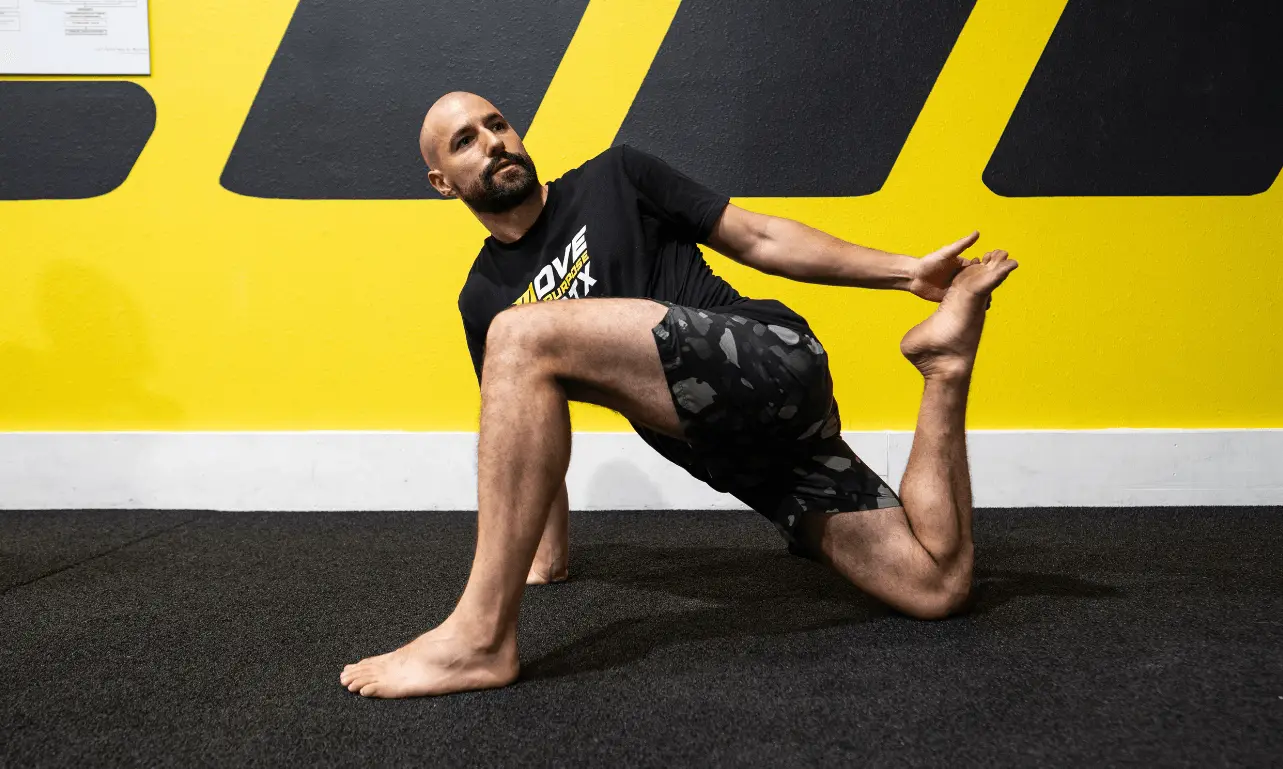
Knee Pain Isn’t the Problem. It’s the Signal.
Knee pain is one of the most common reasons people in Austin look for personal training. It shows up in runners, lifters, golfers, pickleball players, and people who simply want to move without constantly thinking about their joints.
Most people don’t ignore it. They stretch, strengthen, rest, or search for knee pain exercises and try whatever comes up. Sometimes that helps. Often, it doesn’t last.
The issue isn’t effort or discipline. The issue is that knee pain is rarely a knee-only problem, and most training approaches treat it like one.
At Motive Training, we don’t chase knee pain. We train the system that’s forcing the knee to work beyond its current capacity.
Why Most Knee Pain Exercise Programs Stall Out
Most knee pain programs fail because they start with exercises instead of inputs.
The knee is a force-transferring joint. It sits between the hip and ankle and responds to how well those joints can create, absorb, and redirect load. When either end lacks usable range or strength, the knee compensates.
That compensation eventually shows up as pain.
Generic programs tend to:
- Strengthen muscles without expanding joint workspace.
- Avoid uncomfortable positions instead of improving tolerance.
- Load patterns the body can’t yet support.
The result is short-term relief and long-term frustration.
How We Assess Knee Pain Before Programming Anything
Before we decide how to train someone with knee pain, we need to understand what the knee is being asked to do that it can’t currently tolerate.
That starts with a Functional Range Assessment, not a quick movement screen or posture check.
What We’re Looking For
We assess:
- Knee flexion and extension capacity.
- Passive versus active range gaps.
- Closing angle tolerance.
- Hip internal and external rotation.
- Ankle and foot contribution to force absorption.
- How the knee responds to controlled load.
A knee with large passive range but poor active control requires a very different strategy than one limited by closing angles or joint irritation. These distinctions dictate which inputs we apply and how aggressively we apply them.
How Knee Pain Is Trained, Not Rehabbed
At Motive, knee pain isn’t something we “fix” and move past. It’s feedback that guides training priorities.
Programming follows a clear order: expand capacity first, then layer strength and integration.
Expanding Knee Workspace
If the knee lacks usable range, that becomes the priority.
This often includes:
- Controlled knee extension work.
- Knee flexion inputs that respect closing angles.
- Low-output contractions at end range.
The intent is not fatigue. It’s teaching the nervous system that these positions are controllable again.
This is foundational mobility training, not stretching for the sake of stretching.
Offloading the Knee Through the Hip and Ankle
The knee doesn’t operate in isolation, so neither does the training.
We frequently emphasize:
- Hip internal rotation capacity to clean up knee tracking.
- Hip extension control to reduce anterior knee stress.
- Ankle dorsiflexion to improve force distribution during gait and squatting.
When these joints start doing their job, knee symptoms often decrease without directly hammering the knee itself.
Building Strength Without Irritation
Strength still matters. We just don’t chase it blindly.
For knee pain, this usually means:
- Isometric work to build tissue tolerance.
- Slower tempos to control force exposure.
- Submaximal loading that respects current capacity.
Progression is dictated by response, not arbitrary timelines.
As tolerance improves, range and load expand together inside a structured personal training program designed around how the body actually adapts.
Why We Don’t Avoid “Problem” Movements Forever
Avoidance feels safe, but it doesn’t build resilience.
If someone can’t squat, hinge, or step down without discomfort, the solution isn’t to eliminate those patterns indefinitely. The solution is to rebuild the joint’s ability to tolerate them.
Training progresses from:
- Isolated joint inputs.
- To integrated movement patterns.
- To real-world loading that reflects the client’s goals.
The objective is adaptability, not symptom suppression.
Who This Knee Pain Training Approach Is For
This approach works well for:
- Active adults with persistent knee discomfort.
- Athletes dealing with recurring irritation rather than acute injury.
- People who have already tried rehab-style programs without lasting results.
- Anyone who wants to keep training instead of tiptoeing around pain.
Acute trauma or post-surgical cases require medical clearance and coordination first. Training should respect that context.
Why Local Coaching in Austin Matters
Austin is an active city with year-round training demands. Heat, volume, lifestyle stress, and sport-specific loading all influence how knees respond to training.
Local coaches who understand those demands and can adjust programming in real time matter. Knee pain isn’t static. Training shouldn’t be either.
The Real Objective: Capacity You Can Trust
Strong knees aren’t built by avoiding stress. They’re built by exposing the joint to the right inputs, at the right intensity, in the right order.
When capacity improves, confidence follows. When confidence returns, people move freely again.
That’s how knee pain stops being the limiter.
Written by

Brian Murray, FRA, FRSC
Founder of Motive Training
We’ll teach you how to move with purpose so you can lead a healthy, strong, and pain-free life. Our headquarters are in Austin, TX, but you can work with us online by signing up for KINSTRETCH Online or digging deep into one of our Motive Mobility Blueprints.