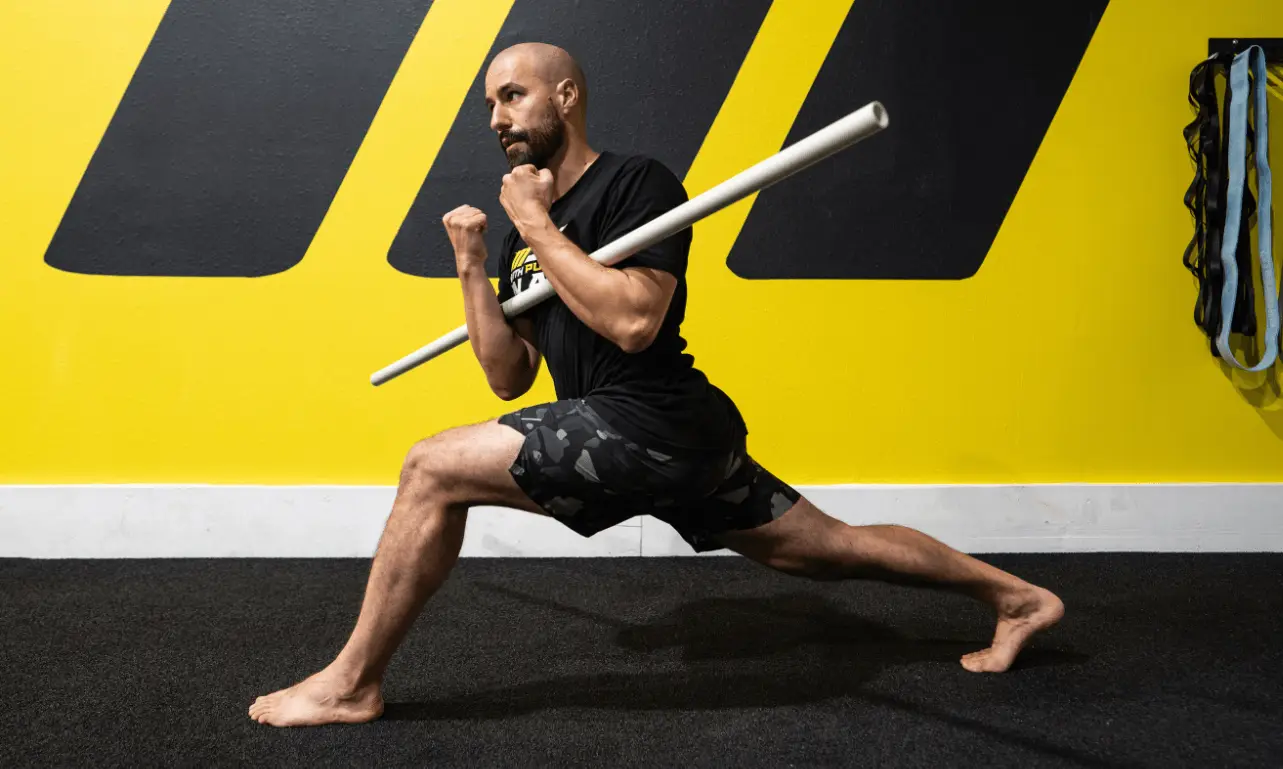
People ask “what is KINSTRETCH and how does it work” because most mobility advice feels vague. You stretch something, you feel looser, and then two days later you’re right back where you started. Nothing sticks. Nothing carries over to lifting, running, or daily life.
KINSTRETCH is different because it isn’t built around getting a temporary stretch sensation. It’s built around creating usable range of motion and then strengthening that range so your body can actually own it.
At Motive Training, we use KINSTRETCH as a training method, not a recovery accessory. The goal is simple: build joint capacity so movement feels better and performance becomes more repeatable.
If you want to jump straight to class details, start here.
What KINSTRETCH Is
KINSTRETCH is structured mobility training designed to improve joint function through active control. It focuses on expanding range of motion and building strength at the edge of that range. That “edge” is where most people get stuck.
Many people have ranges they can access passively but cannot control actively. That gap shows up as stiffness, instability, compensation, and the feeling that your body has one gear.
KINSTRETCH closes that gap by training mobility like a skill. You practice it. You load it. You progress it.
What KINSTRETCH Is Not
KINSTRETCH is not a passive stretching class. It is not a random flow where you copy movements and hope your hips open. It is not a warm-up checklist you rush through so you can get to the real workout.
It’s training. It has intent. It should feel focused.
How KINSTRETCH Works
KINSTRETCH works because it targets three things most people never train directly.
Joint workspace.
This is the amount of motion a joint can access without feeling blocked, pinchy, or threatened.
End-range strength.
Range without strength is not reliable. If you want a position to show up under load, you have to strengthen it.
Control and coordination.
Your nervous system needs reps in the new range so it trusts it. That trust is what makes movement feel smoother and more stable.
This approach comes from Functional Range principles.
What A KINSTRETCH Class Looks Like
KINSTRETCH classes are joint-focused. You’ll see themes like hips, shoulders, spine, ankles, or full body. The structure stays consistent, even when the joint focus changes.
You can expect:
- Intentional joint rotations to map your current range and build control through it.
- Specific positional work to expand range safely.
- Strength-focused contractions at end range to make the new range usable.
- Progressions that build week to week instead of bouncing around.
Who KINSTRETCH Is For
KINSTRETCH is for people who want their body to feel more capable.
That includes:
- Lifters who feel limited by hips, shoulders, ankles, or spine position.
- Runners who feel tight and stuck in one pattern.
- Desk-bound adults whose bodies feel stiff by mid-afternoon.
- People dealing with recurring aches who want a plan that builds resilience instead of avoidance.
- Athletes who need rotation, control, and deceleration options.
It’s also a strong fit for beginners because it teaches you how to feel joints and positions, not just copy exercises.
Why Mobility Training Should Feel Like Strength Training
Most people treat mobility as something gentle. That’s part of the problem.
The body adapts to stimulus. If the stimulus is always light, short, and unstructured, the adaptation is usually light, short, and temporary.
KINSTRETCH treats mobility like capacity building. You train the edge of range with intent. That is what changes tissue tolerance and control over time.
Common Results People Notice
KINSTRETCH doesn’t promise a perfect body. It improves what is trainable.
Most people notice:
- Better positions in strength training, especially squats, hinges, overhead work, and lunges.
- Less stiffness after sitting or travel.
- Fewer flare-ups that interrupt workouts.
- Better control in awkward positions, not just comfortable ones.
- A more confident sense of what their body can do.
The biggest result is consistency. Training becomes repeatable, and repeatable training is what creates real change.
How KINSTRETCH Fits With Personal Training
A lot of people use KINSTRETCH as the foundation that makes strength training feel better.
Personal training is where you build the big rocks. Strength, conditioning, skill, and progression. KINSTRETCH supports that by improving the joint workspace and control your lifts depend on.
If you want a clear starting point, an assessment helps identify your biggest joint priorities so your training stays targeted.
If you want to train in person, start here.
KINSTRETCH Online
Not everyone can make it to class in Austin every week. Some people travel. Some want an at-home option on days they’re not lifting. Some people do better with structure they can repeat on their own.
KINSTRETCH Online gives you guided sessions you can follow from anywhere. The benefit is consistency. You can train joint capacity in a way that stacks week to week instead of resetting every time life gets busy.
How To Know If KINSTRETCH Is Working
Mobility progress is easy to misread if you only pay attention to stretch sensation.
Better markers are:
- You can access a range with less effort.
- You can hold and control the edge of range with more stability.
- Strength work feels smoother because your joints have more workspace.
- You bounce back faster from long sitting, heavy training, or travel.
- The same movements stop feeling unpredictable.
Look for repeatability. Your body should feel less like a guessing game.
Frequently Asked Questions
What is KINSTRETCH and how does it work?
KINSTRETCH is mobility training that improves joint function by building usable range of motion, end-range strength, and control. It works by training the ranges your body avoids and strengthening those ranges so they hold up under real movement.
Is KINSTRETCH only for flexible people?
No. It’s often more helpful for people who feel stiff, limited, or inconsistent because it trains capacity instead of chasing a stretch.
Does KINSTRETCH replace lifting?
No. It supports lifting by improving the joint workspace and control that good strength training depends on. Many people pair KINSTRETCH with strength work for the best result.
How often should I do it?
Consistency matters more than perfection. One to three times per week is a strong start for most people, especially if you lift or run regularly.
Closing
If you’ve been stuck doing random mobility drills and getting the same results, it makes sense to ask what KINSTRETCH is and how it works. It works because it trains mobility like capacity, not like a temporary stretch routine.
If you want to start in person, begin here.
If you want a structured option at home, start here.
Written by

Brian Murray, FRA, FRSC
Founder of Motive Training
We’ll teach you how to move with purpose so you can lead a healthy, strong, and pain-free life. Our headquarters are in Austin, TX, but you can work with us online by signing up for KINSTRETCH Online or digging deep into one of our Motive Mobility Blueprints.