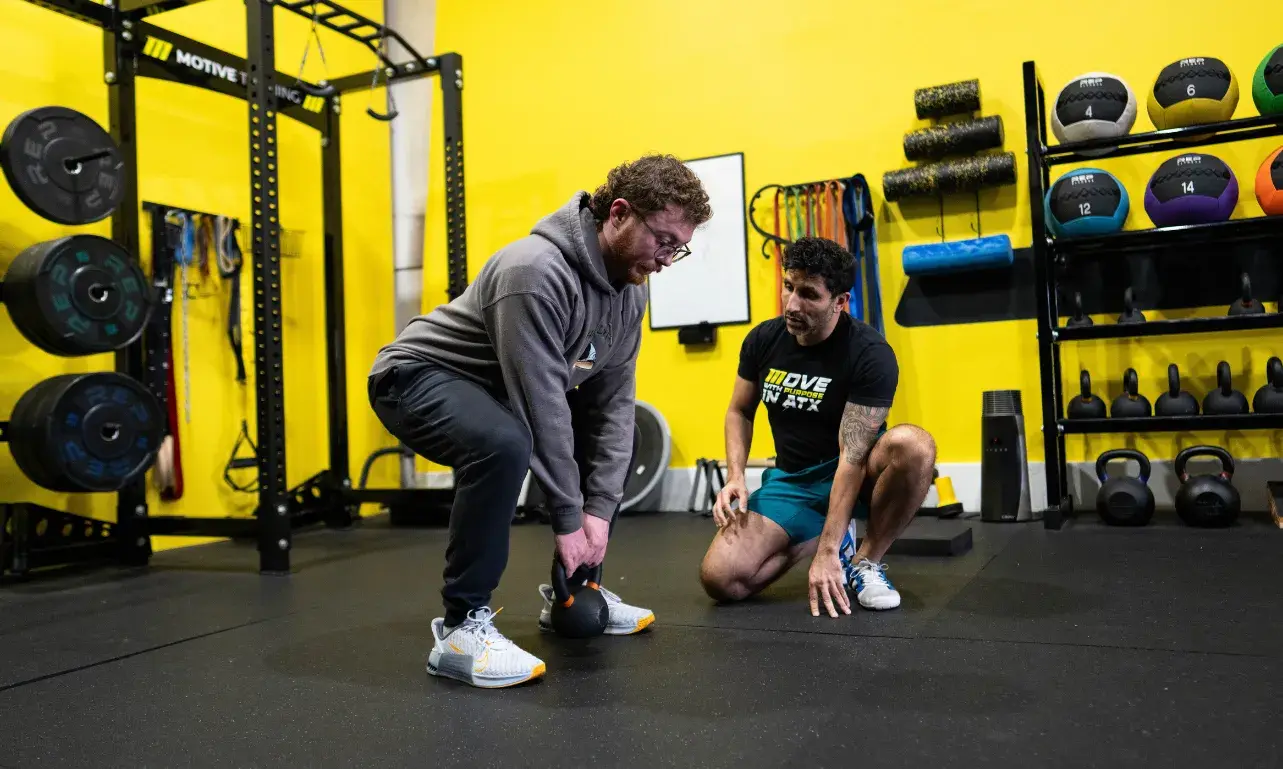
We crave movement.
The human body was built to rotate, shift, stabilize, and produce force in multiple directions. Yet most people train in straight lines, on fixed machines, isolating muscles instead of integrating movement.
Functional training is often presented as the alternative. The better way. The smarter way.
But like most terms in fitness, it has been watered down.
So let’s define it clearly.
What Functional Training Actually Means
Functional training is not random circuits. It is not balancing on unstable surfaces. It is not making simple exercises more complicated.
At its core, functional training means building strength and control in patterns that transfer to real life.
That includes:
- Multi-joint coordination
- Rotational strength
- Control through usable ranges of motion
- Stability under load
- The ability to absorb and redirect force
If an exercise improves your ability to move well outside the gym, it is functional.
If it just makes you tired, it is conditioning.
There is a difference.
Strength That Carries Over
Most people who come to Motive Training are not trying to become bodybuilders. They are trying to move without pain. They want to lift, hike, run, play sports, or simply get through the workday without stiffness accumulating.
Functional training builds a foundation that supports those goals.
Instead of isolating a single muscle, we train movements that require joints to work together. The hips must rotate. The spine must stabilize. The shoulders must control overhead positions. The ankles must absorb force.
When joints move well and are strong in those positions, compensation decreases. Pain often decreases. Capacity increases.
That is where systems like Functional Range Conditioning fit in. We assess how each joint moves, identify limitations, and strengthen those areas before asking the body to produce high output.
Stronger joints create stronger movement.
Movement Quality Before Intensity
Many people chase intensity first.
They jump into high-volume circuits or aggressive lifting programs without asking a simple question: does my body actually have the capacity for this?
Functional training respects that order.
We build control before complexity. We expand usable range before adding load. We strengthen positions before asking for speed.
This does not make training easier. It makes it smarter.
Over time, this approach improves coordination, balance, and force production. You feel more stable under load. You recover better. You stop feeling fragile.
That is not hype. It is what happens when structure replaces randomness.
If you want to understand how this integrates into broader programming, our Mobility Training approach breaks down how joint preparation and strength development work together.
Performance Without Breaking Down
For athletes and highly active adults, functional training becomes even more important.
Rotational sports like golf, tennis, and pickleball demand controlled hip and thoracic rotation. Running and cycling demand stable hips and resilient ankles. Grappling demands shoulder integrity under chaotic force.
If the joints lack capacity, the spine or smaller structures absorb stress.
Functional training addresses the underlying limitations that quietly cap performance.
Instead of chasing more volume, we improve movement efficiency. Instead of layering intensity on dysfunction, we expand capability first.
That is how performance improves without increasing injury risk.
Energy Expenditure With Purpose
Yes, functional training burns calories.
Any multi-joint, load-bearing movement performed with effort will elevate heart rate and drive metabolic demand.
But that is not the primary goal.
The goal is adaptation.
When strength, mobility, and coordination improve together, training becomes sustainable. You can push hard without feeling beaten down. You can train consistently without flare-ups.
Consistency changes bodies. Random intensity rarely does.
Assessment Makes It Specific
The biggest mistake people make with functional training is assuming it is one universal template.
It is not.
Every client who trains with us begins with a Functional Range Assessment. We measure how joints move, where active control is lacking, and where strength needs to be developed.
From there, programming becomes specific.
Two people can both “do functional training” and have completely different plans because their bodies are different.
That precision is what makes the training effective.
If you are looking for a clearer picture of how we structure this inside the gym, our Personal Training Programs outline exactly how we build strength and mobility together.
The Bigger Picture
Functional training is not about novelty. It is not about looking athletic. It is not about copying what professional athletes do.
It is about building a body that:
- Handles load
- Moves with control
- Adapts to stress
- Maintains capacity over time
That is longevity.
Most people do not need more exercises. They need better structure. They need training that respects how the body actually works.
Functional training, done correctly, provides that structure.
It brings strength and mobility back into the same conversation. It restores options to joints that have lost them. It gives people confidence in their bodies again.
That is what it means to move with purpose.
Written by

Brian Murray, FRA, FRSC
Founder of Motive Training
We’ll teach you how to move with purpose so you can lead a healthy, strong, and pain-free life. Our headquarters are in Austin, TX, but you can work with us online by signing up for KINSTRETCH Online or digging deep into one of our Motive Mobility Blueprints.