St. Elmo · South Austin · Cash-based, no insurance
Manual therapy in South Austin for pain that has not responded to other care
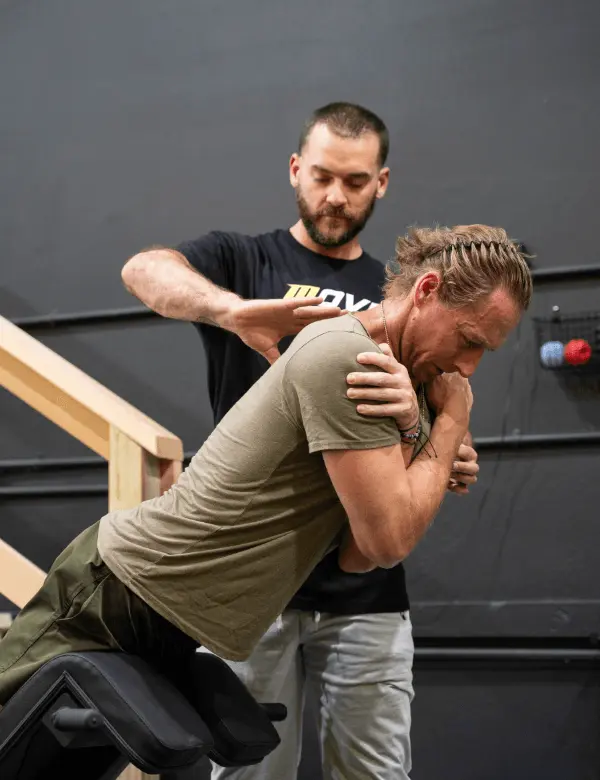
Hands-on work on the tissue itself, paired with training that makes the change last. Built on Functional Range Conditioning and Functional Release, the same system behind everything else at Motive Training.
90-minute first visit · No referral needed · Pay per visit or save with a pack
The method
How a session goes
Most hands-on work for pain falls into one of two categories. There is the kind that feels good in the moment and does not change much, and there is the kind that fixes the one spot that hurts without asking why it got that way. This is neither. It is built on Functional Range Conditioning and Functional Release, a system that treats the tissue, the joint, and the way you actually move as one problem, not three separate ones. The table work opens things up. The training keeps them open. You need both, and this is set up to give you both under one roof.
01
Assessment of how your joints actually work
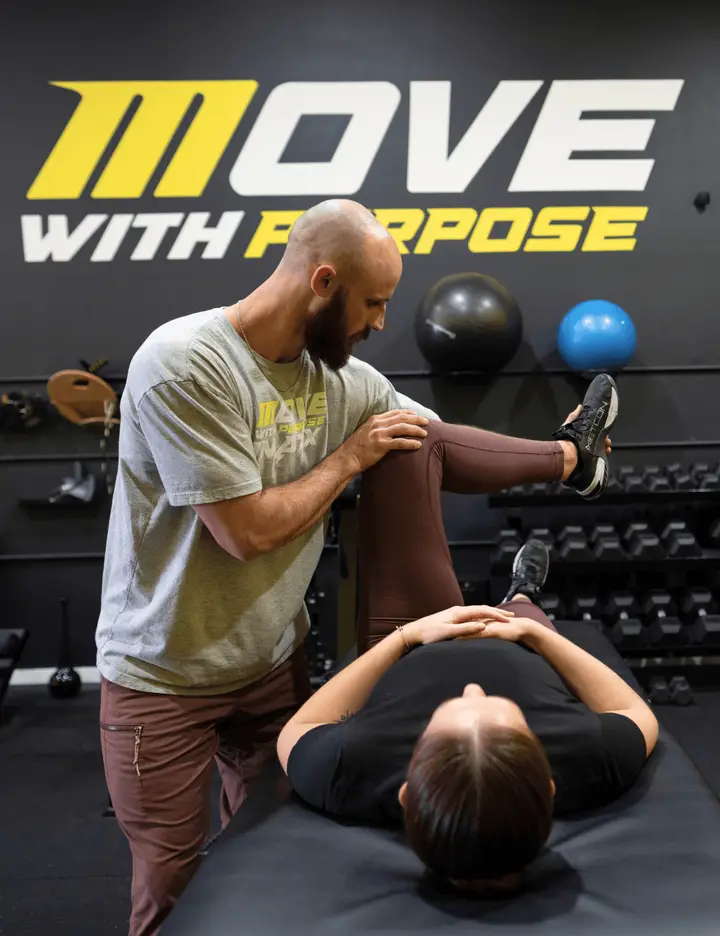
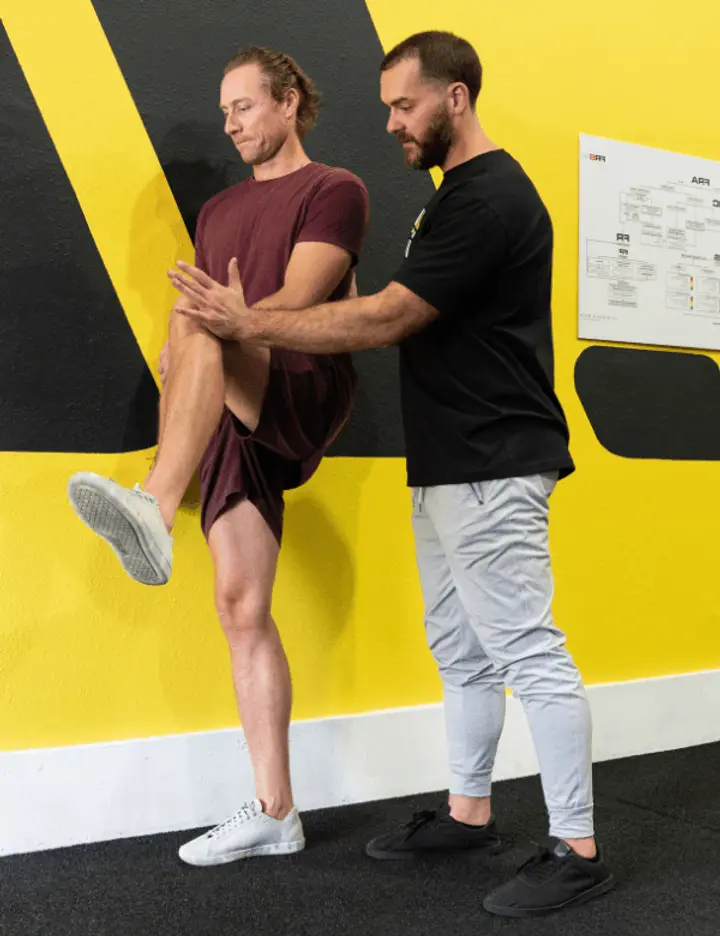
We test how each joint moves two ways: passively, where we move it for you, and actively, where you move it yourself. The gap between those two numbers is usually where the problem lives. Someone might have plenty of hip range available when we move the leg for them and almost none when they try to produce that same motion on their own. That gap is the target. We also check the joints above and below the painful one, because the spot that hurts is often not the spot that is actually stuck.
02
Hands-on tissue and joint work
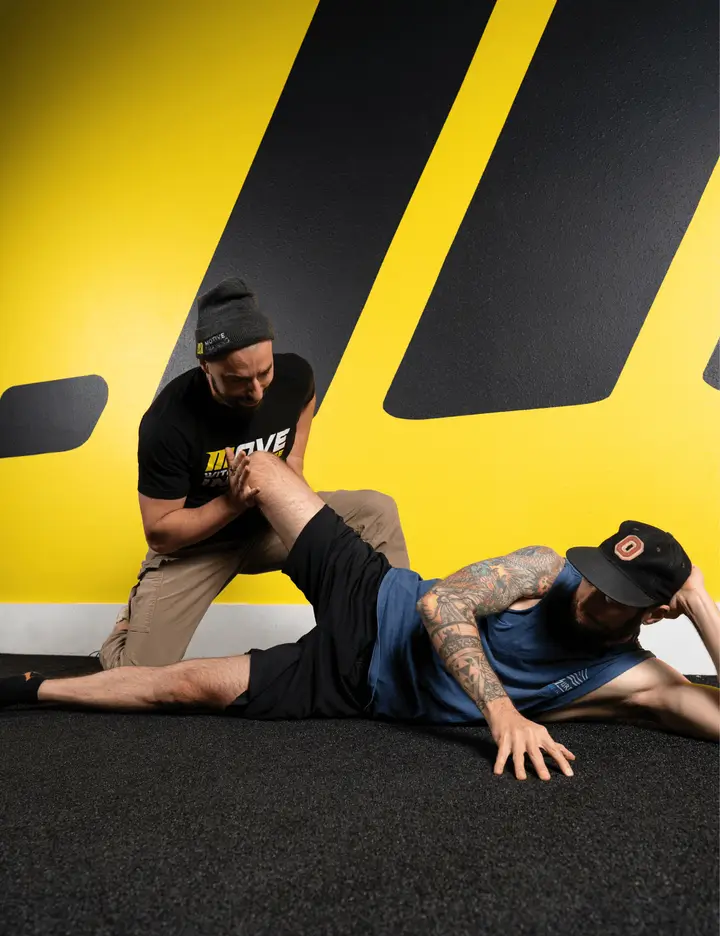
We work directly on the tissue and joints the assessment points to. Connective tissue takes time to change, and the nervous system needs the right input, held long enough, to trust a new range as safe. That is why these sessions run long instead of short. Most people feel a real difference in how a joint moves before the session ends.
03
Mobility work, and training, to keep the new range
You leave with two or three drills built around what we worked on, usually some version of CARs and end-range strength work at the new range. These are not homework tacked onto the end. They are how the range gets claimed instead of lost again in 48 hours. If you are already training with us, these drills fold straight into your programming. If you are not, we will build a simple plan around them, because range nobody trains rarely sticks.
Common areas
What we work on
Most of what comes through the door falls into a handful of patterns, but the process underneath them barely changes from one to the next. The spot that hurts is rarely the spot that is actually limited. A knee that will not tolerate depth is often a hip that never learned to rotate under load. A shoulder that catches overhead is often a mid-back that stopped moving years ago and never told anyone. That is why the assessment always checks the joint above and below the complaint, even when someone is sure they already know where the problem lives.
Back pain
Tightness that builds up from sitting, setbacks from lifting, stiffness after surgery, the thing that flares every few months and never fully clears.
Neck and shoulder pain
Limited range overhead, impingement, the tension that builds from hours at a screen, posture issues that lifting alone will not fix.
Hip pain
Stiff hips from long days sitting, runners and cyclists with chronic flexor issues, lifters who cannot get to depth, range work after surgery.
Knee pain
Tendinopathy, patellofemoral pain, stiffness after surgery, the runner's knee that did not respond to rest.
Pre and post-surgical
Get strong and mobile before surgery so recovery starts from a better place. Or rebuild range and strength after, when standard PT was not enough on its own.
Performance ceilings
For people who are not injured but cannot break through a range or strength limit. The work that turns “I have always been tight here” into something that is no longer true.
The fit
Who this works for
The work fits some situations better than others. Two short lists, so you can tell quickly.
This is for you if
- You have done PT and want to keep making progress without the insurance process
- You run, lift, cycle, or play rec sports and have a limit that will not resolve on its own
- You sit at a desk all day and your neck, back, or hips are paying for it
- You have had massage, it felt good, but nothing actually changed
- You are already training at Motive and want hands-on work added to it
- You want to understand what is actually going on in your body, not just have someone work on it
This is not the right fit if
- You are looking for a relaxation massage, which is a different category of work entirely
- You need insurance billing, which we do not do
- You have an acute injury a doctor has not looked at yet
- You are in the middle of a serious flare-up that needs medical care first
- You want someone to work on your back without asking any questions about how it got that way
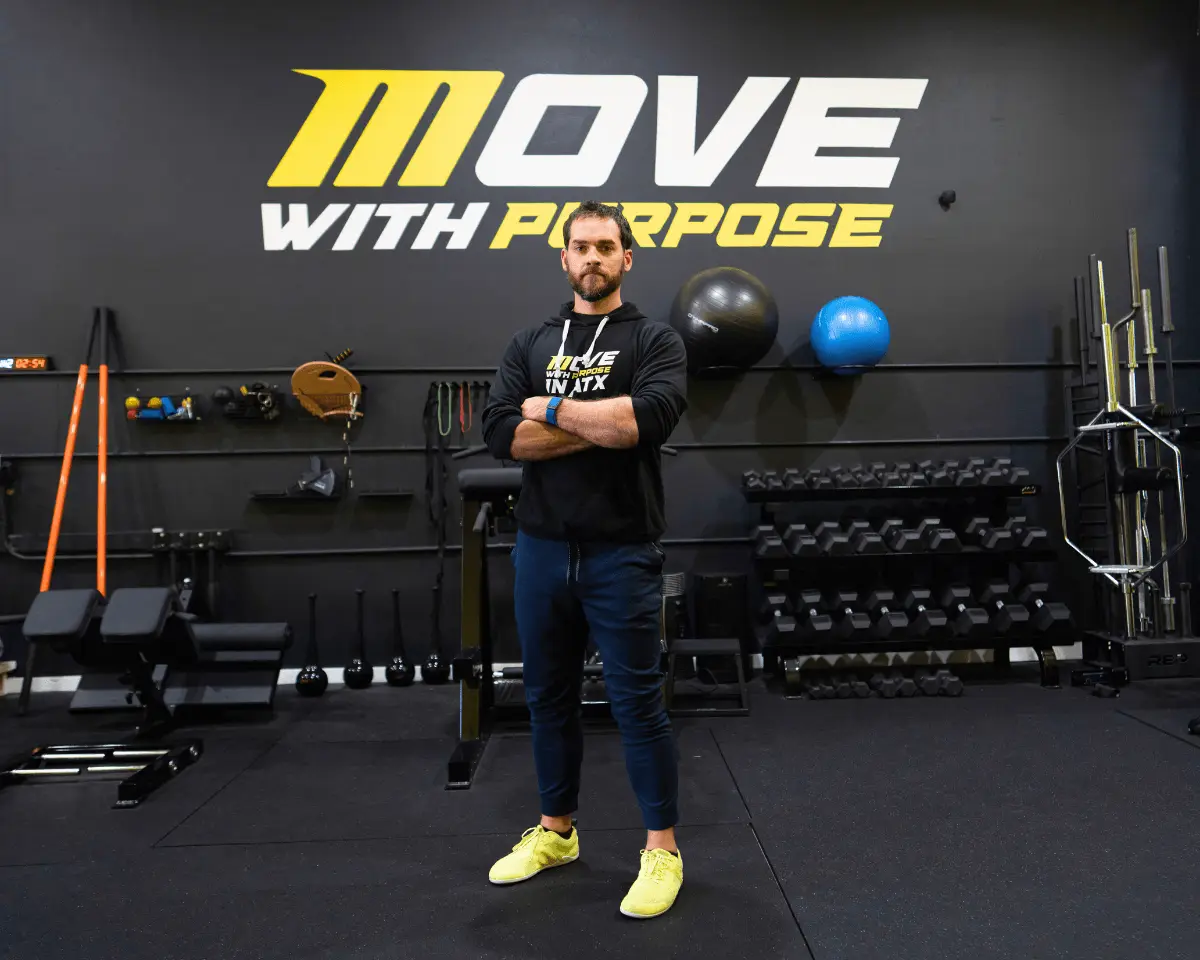
The practitioner
Who you will be working with
Brian Murray has coached general population adults, athletes, and people in pain for 17 years. He founded Motive Training in South Austin to put strength work, mobility training, and manual therapy under one roof, because joint quality, capacity, and pain are not really three separate problems. They are one problem looked at from different angles.
Brian is a Licensed Massage Therapist in the state of Texas, and holds FRC Mobility Specialist (FRCms), FRC Spine (FRSC), Functional Range Assessment (FRA), Functional Release (FR), and KINSTRETCH Level II certifications through Functional Anatomy Seminars, the organization founded by Dr. Andreo Spina.
In plain terms: FRC is a joint-by-joint training system built on how connective tissue actually adapts to load over time. FR is the hands-on side of that same system, applied at the table instead of the gym floor. KINSTRETCH is the group-class version, taught weekly at Motive. Manual therapy is the piece that uses hands instead of cues. It is one system, worked from three directions.
Pricing
Cash-based pricing, no surprises
No insurance billing, no back-and-forth. Pay per visit, or save with a pack. Everyone starts with the 90-minute assessment so there is a real picture of what we are working on before anything else happens.
First visit · Required for new clients
Initial Assessment
Manual Therapy + Mobility Assessment
Up to 90 min · includes movement screen, hands-on work, take-home drills
Ongoing sessions · After your first visit
Manual Therapy + Mobility Session
$165 / 75 min
Pay per session
- No commitment
- Full 75-min session
- Take-home drills
4-session pack
$600 / 4 sessions
$150 per session
Save $60 vs. paying per visit
- Right size to see real change
- Priority scheduling
- 6-month expiration
8-session pack
$1,160 / 8 sessions
$145 per session
Save $160 vs. paying per visit
- Best per-session rate
- Priority scheduling
- 6-month expiration
Packs expire in 6 months. Existing Motive Training clients pay the same rates, and packs can be shared with a training partner.
FAQ
Common questions.
- Is this the same as a massage?
-
Not really. It can look similar from the outside, but the system underneath is different. Every visit starts from an assessment, targets the specific tissue and joints that assessment points to, and ends with movement work so whatever range opens up actually holds. The goal is a change in what your body can do, one that is still there next week.
- What is the difference between this and physical therapy?
-
PTs work inside the insurance system and can diagnose and treat injuries, usually after something has already happened. This work is closer to sports performance than insurance-billed clinical care. It is cash-based and built for people who have graduated from PT and still have a limit that will not move, or who want to get ahead of one before it becomes a bigger problem. We do not diagnose conditions or write medical referrals. If something needs that, we will say so and point you to the right person.
- Do I need a referral?
-
No. Book directly. If the assessment turns up something that needs medical evaluation first, we will tell you and refer you out.
- How many sessions am I looking at?
-
Honestly, it depends how long the issue has been building. Connective tissue does not reorganize in one visit. Most people notice a real shift in three to four sessions. Longer-standing issues usually take six to eight. The 4-pack is sized to be a real first commitment, enough to know if this approach is working for you, without locking you into something open-ended.
- I am already training at Motive. How does this fit with what we are already doing?
-
It stacks directly on top of your training. The table work and the gym floor are running the same system from two directions. We can sequence sessions around your programming, work on whatever is currently limiting a lift or a run, and use what we find on the table to update what we are doing in the gym.
- I am not a Motive client. Do I need to be training here too?
-
No. Plenty of people come in for manual therapy alone. But the honest answer is that tissue work fixes the tissue problem, and training fixes the capacity problem, and most people who feel real, lasting change end up doing both eventually, even if they start with just one.
- What should I wear?
-
Whatever you would train in. Shorts or leggings, a t-shirt or tank, something you can actually move in. We work in whatever areas the assessment points us to, so flexible is the move.
- How quickly can I get in?
-
Usually within a week. Existing clients with packs get priority scheduling.
Get Started
Ready to figure out what is actually going on?
Start with the 90-minute assessment. You will leave knowing what is driving the issue, what to do about it, and whether more sessions are the right call.
Book your assessmentMotive Training · 714 Shelby Ln · St. Elmo, South Austin